SustAInLivWork Annual Meeting Highlights Progress in AI Research and Development

On 19–20 September 2024, leading artificial intelligence (AI) researchers and experts from across Europe gathered in Palanga for the Annual Meeting of the SustAInLivWork Project. The event, hosted at Gradiali Hotel, brought together project partners and stakeholders to discuss the advancements in AI-based solutions aimed at improving sustainability in key sectors such as energy, healthcare, manufacturing, and transport.

The event’s opening day featured a series of plenary sessions and panel discussions that highlighted the transformative potential of AI across various industries. The project’s manager, Prof. Dr Agnė Paulauskaitė-Tarasevičienė from Kaunas University of Technology (KTU), opened the event by addressing the increasing impact of AI in everyday life.

“AI is no longer a futuristic concept; it’s already transforming the way we work and live,” said Prof. Dr Paulauskaitė-Tarasevičienė during her welcome speech.

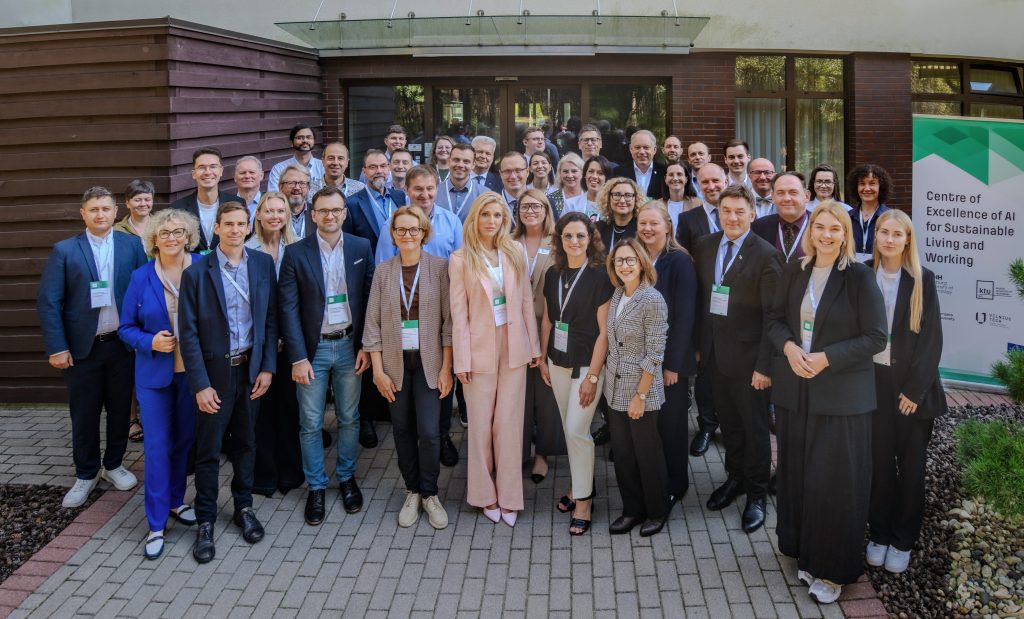
The Annual Meeting of the SustAInLivWork. A large group of professionals pose together outside at the launch event for the Centre of Excellence for Sustainable Living and Working. A banner on the right marks the occasion, highlighting the initiative’s focus on AI-driven research and innovation in sustainability.
Participants in the annual SustAInLivWork meeting

“In Lithuania, we are building a strong AI ecosystem, and with projects like SustAInLivWork, we are positioning ourselves at the forefront of AI research and innovation, not just regionally, but globally. The AI-driven advancements we are discussing today have the potential to significantly improve healthcare, optimise energy usage, enhance industrial processes and advance transportation.” She also emphasised the importance of effective collaboration in realizing the Centre of Excellence for Sustainable Living and Working with Artificial Intelligence (SustAInLivWork): “This is a team-oriented project, and its success is based on strategic partnership and effective collaboration.”

Plenary Sessions Spotlight Key AI Innovations

One of the key highlights of the first day was the plenary session on AI solutions for business, energy, and transport. Romualda Stragienė, CEO of Innovation Agency Lithuania and a member of the project’s Advisory Board, presented the transformative potential of AI in business, emphasising its role in driving innovation and improving efficiency.

“The current state of AI is quite like literacy 100 years ago – it was a privilege held by a small group, much like how priests were the only ones who could read and understand texts. 

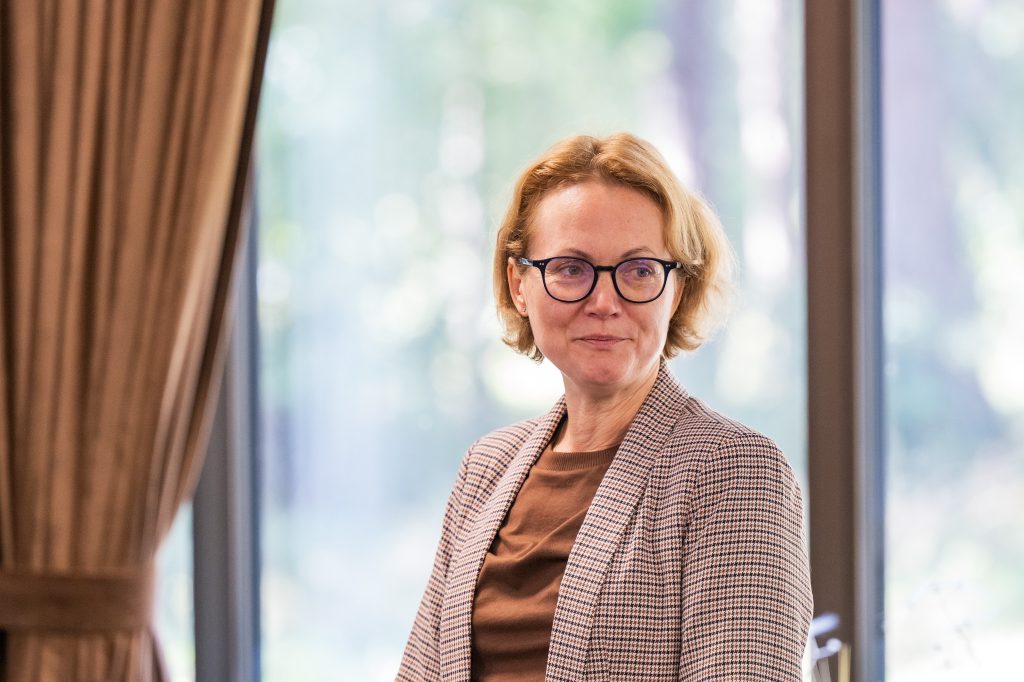
A woman with short blonde hair and glasses stands indoors in front of large windows, wearing a checked blazer and brown top. She appears engaged during a SustAInLivWork event focused on AI and sustainability.
Romualda Stragienė, CEO of Innovation Agency Lithuania

Today, AI is largely concentrated in the hands of big corporations, as they have the resources and millions of users needed to develop such systems. However, we must find ways to make these opportunities more accessible to smaller businesses,” said Stragienė.

The session also featured presentations by Karolis Mirinavičius, Head of Innovation Development at Ignitis Group, who discussed AI’s role in managing smart energy grids, improving renewable energy forecasting, and enhancing energy storage solutions, and Inga Ablingienė, Partner for Development & Project Delivery at the Transport Innovation Association and a member of the project’s Advisory Board, who elaborated on the role of AI in optimising routes, reducing fuel consumption, and supporting the development of autonomous vehicle solutions.

Best Practices and Challenges in AI Deployment

During the event, advanced international partners, including Assoc. Prof. Roel Pieters and Prof. Reza Ghabcheloo from Tampere University (TAU), as well as Prof. Dr Alexander Schlaefer from Hamburg University of Technology (TUHH), showcased best practices and shared insights into AI competencies and their applications in industry.

An important outcome of the first day of the event was the panel discussion on the challenges AI faces in four critical sectors: manufacturing, health, energy, and transport. Arnas Karužas from the Lithuanian University of Health Sciences (LSMU) highlighted the rapid expansion of the AI healthcare market, stating, “By 2030, the market size will be 30 times larger than it is today.”

He also emphasised AI’s potential in drug discovery, noting, “The first molecule created with AI assistance is a major breakthrough, showing how AI can accelerate the drug development process.”

Dr Eldar Šabanovič from Vilnius Gediminas Technical University (VILNIUS TECH) addressed the challenges surrounding AI in autonomous vehicles, stating, “Responsibility for AI decisions depend on the situation and on the level of automation. At higher levels, manufacturers bear the responsibility but transparency in AI’s decision-making is crucial for building trust among users and regulators.”

Progress of the Project’s Work Packages

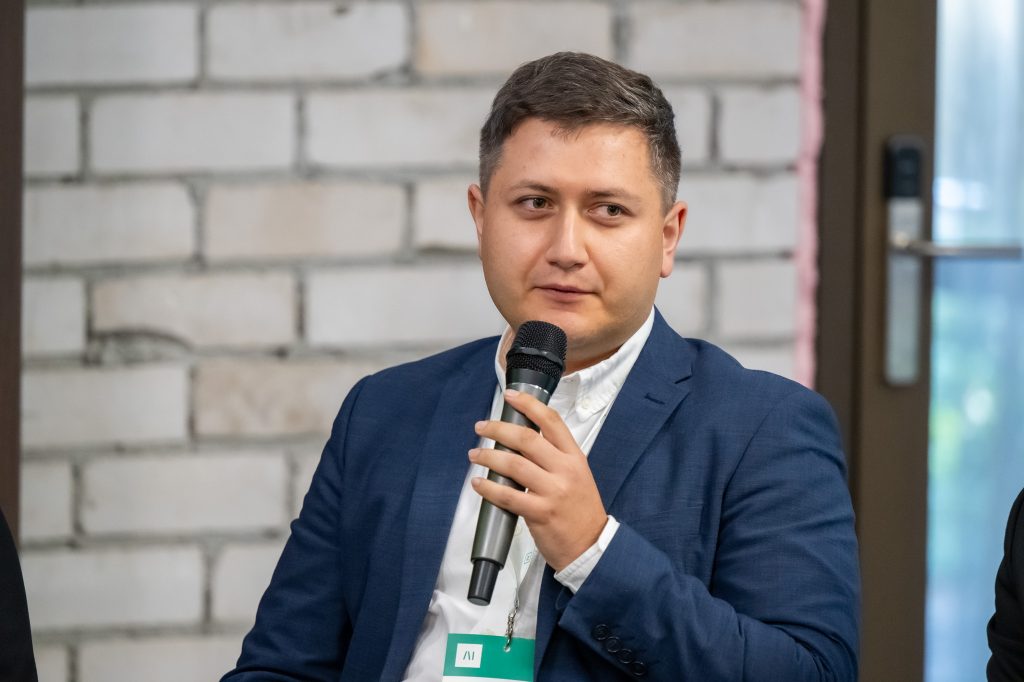
A man in a blue suit jacket and white shirt speaks into a microphone during a SustAInLivWork session. He is seated in front of a white brick wall, contributing to discussions on AI for sustainable living and working.
Dr Eldar Šabanovič, Senior Researcher at VILNIUS TECH

The second day shifted focus towards reviewing the progress of the project’s Work Packages (WP), which are crucial for the development of the SustAInLivWork Centre of Excellence. The day began with a detailed overview of WP1, which focuses on the setup and management, and infrastructure development of the Centre.

Following WP1, each Work Package lead provided updates on the progress made in their respective areas over the past year. Dr Roel Pieters from TAU presented WP2, covering the development of scientific excellence and educational activities in AI. The update on WP3, focusing on deploying AI systems in the public and private sectors, was provided by Dr Mindaugas Bulota from KTU.

Further discussions highlighted the development of the AI network and ecosystem (WP4), presented by Vilma Purienė from VILNIUS TECH, communication and dissemination efforts (WP5), led by Prof. Dr Ričardas Krikštolaitis from Vytautas Magnus University (VMU), and the overall coordination and management of the project (WP6), summarised by Dr Vilma Karoblienė from KTU.

Looking Forward

The SustAInLivWork meeting concluded with plans for the upcoming year, focusing on the infrastructure development of CoE, expanding AI competencies of researchers and students, improving sector-specific solutions, and ensuring that Lithuania remains at the cutting edge of AI research and development.

“By fostering collaboration between academic institutions and industry leaders and by developing AI infrastructure, we are creating a competitive conditions for AI development in Lithuania, Baltic Sea Region and beyond,” said Dr Vilma Karoblienė, Project’s National Funding Part Manager and Head of Research and Innovation Projects Centre at KTU. “This Centre of Excellence will strengthen Baltic Sea Region AI ecosystem and has an ambition to contribute to the achievement of the Global Sustainable Development Goals of United Nations through innovative AI solutions impacting economic, social, environmental and innovation affairs.”

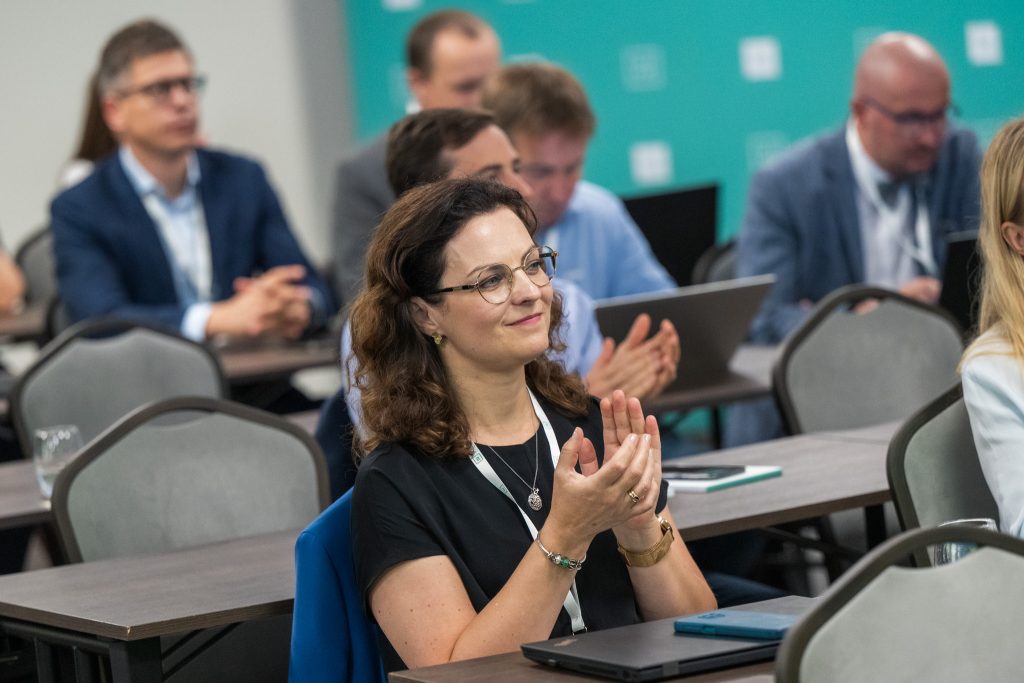
A woman with curly dark hair and glasses claps during a session at a SustAInLivWork event. Seated among other attendees, she appears engaged in the discussions on AI-driven sustainability.
Dr Vilma Karoblienė, Project’s National Funding Part Manager
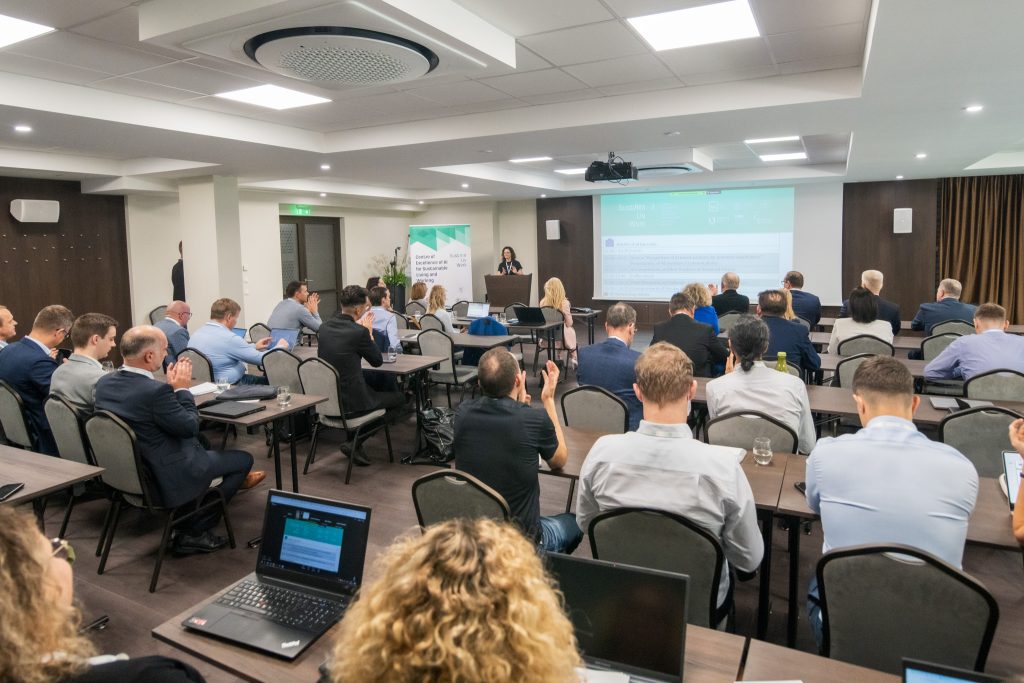
Attendees seated in rows listen to a speaker presenting at the front of a conference room during a SustAInLivWork event. A projection screen displays slides on AI and sustainability, with a banner reinforcing the centre’s mission.
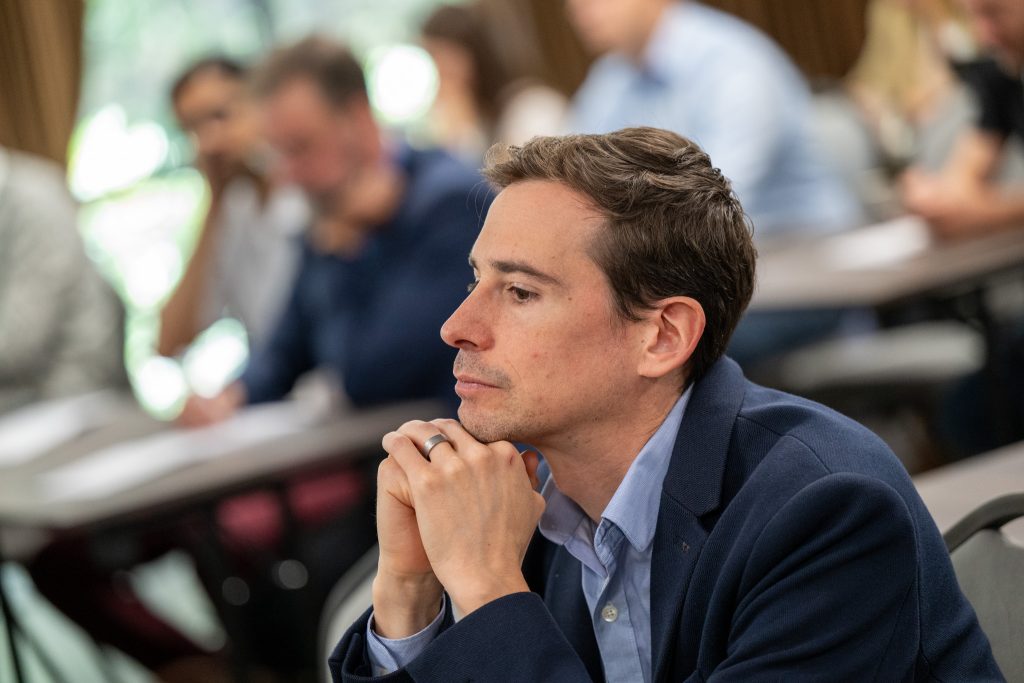
A man in a blue blazer listens attentively with his hands resting under his chin during a SustAInLivWork session. Other participants in the background reflect the event's collaborative focus on AI and sustainability.
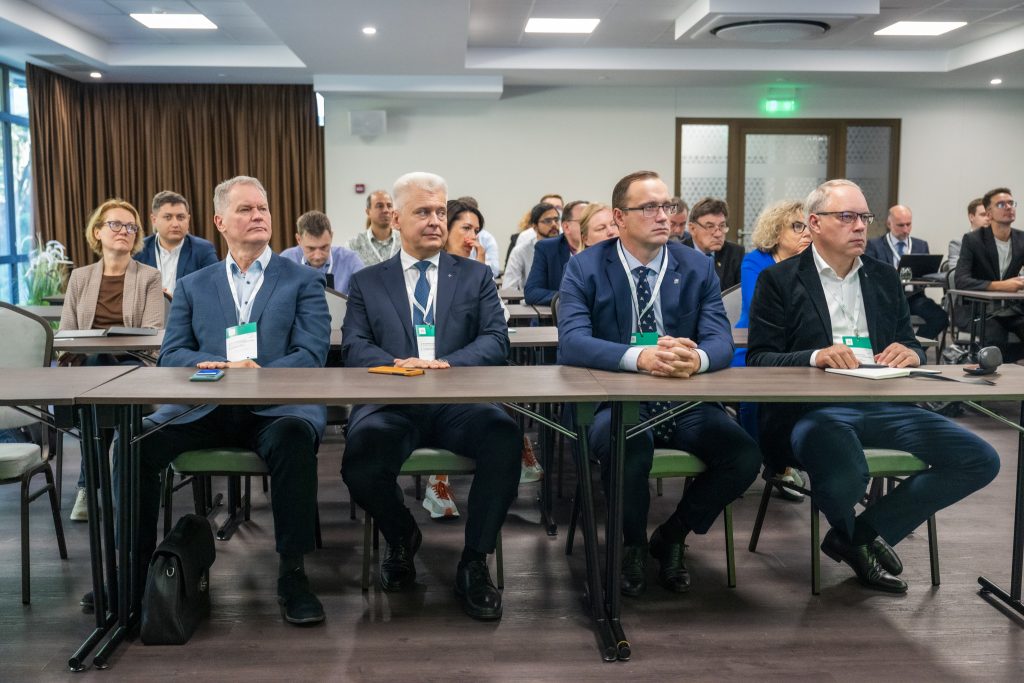
A group of men in business attire sit attentively in the front row of a SustAInLivWork conference session. The audience behind them reflects a diverse group of professionals engaged in discussions on AI for sustainable living and working.
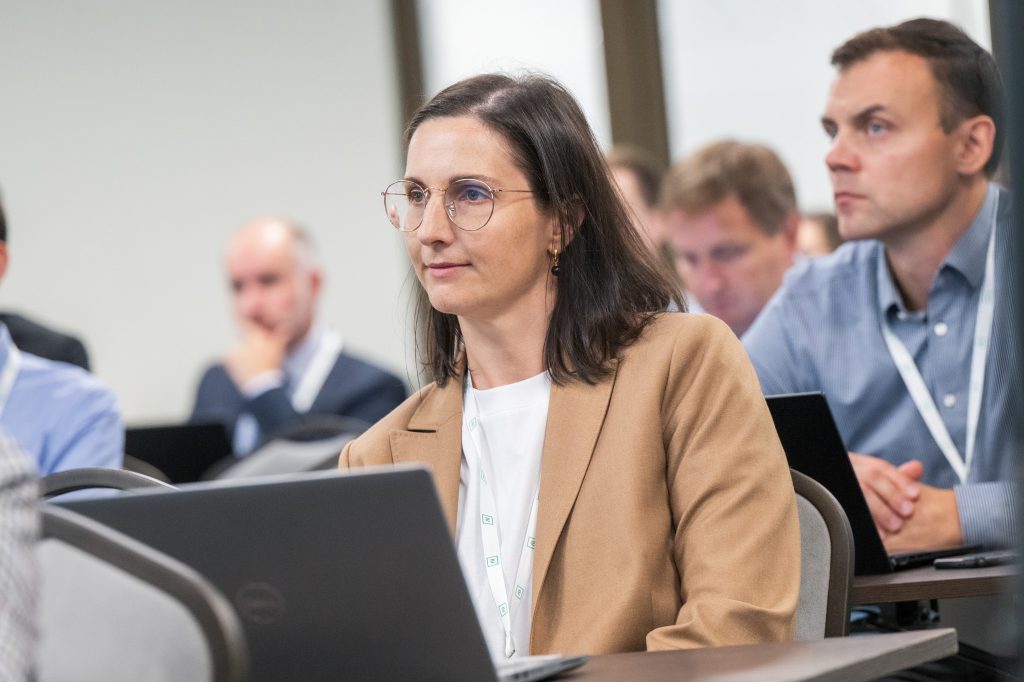
A woman in a tan blazer and glasses listens attentively during a SustAInLivWork session, with a laptop open in front of her. She is surrounded by other focused attendees exploring AI-driven sustainability solutions.
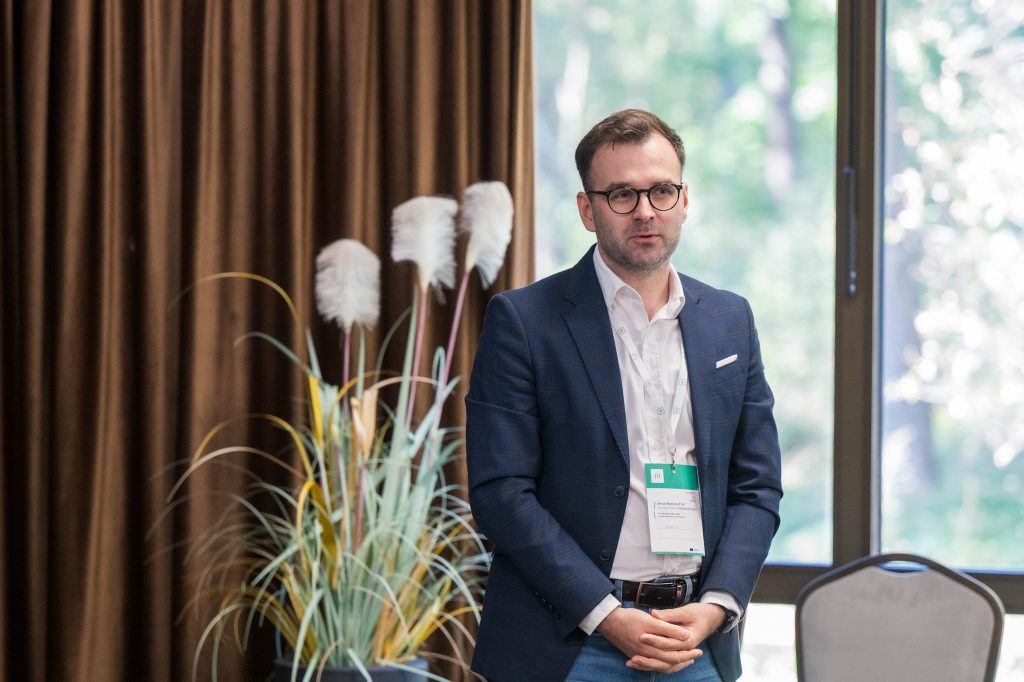
A man in a navy blazer and glasses stands near a window and decorative plants during a SustAInLivWork event. He appears to be presenting or preparing to speak on AI-driven sustainability initiatives.
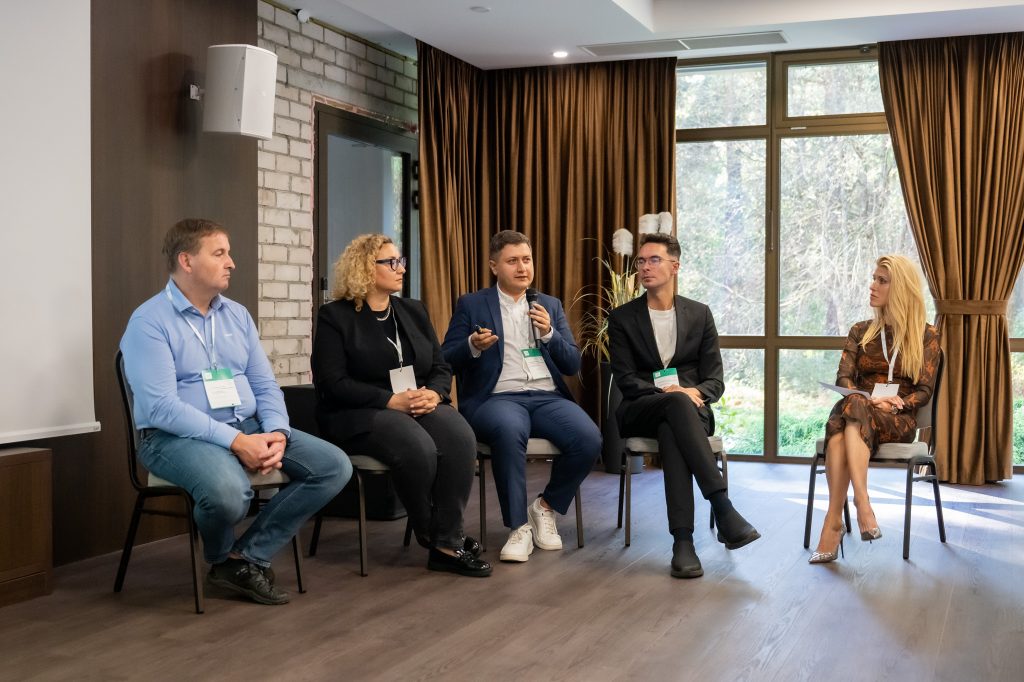
Five panellists sit in discussion during a SustAInLivWork event, with one man holding a microphone and speaking. The setting is a bright room with large windows, highlighting the event’s focus on AI and sustainability.
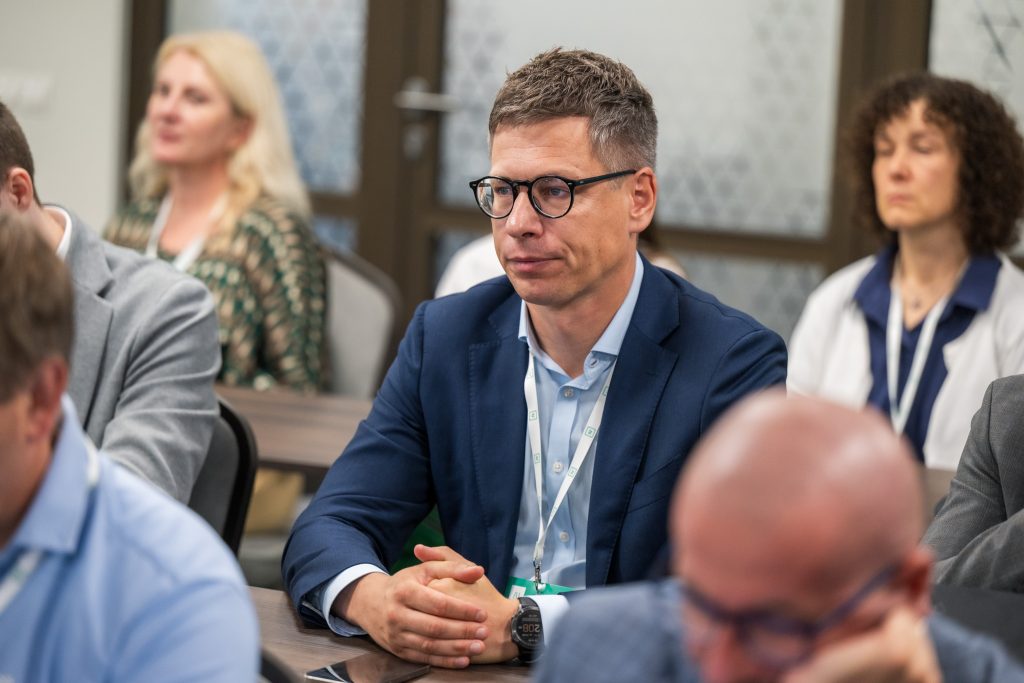
A man in a blue blazer and glasses listens intently during a SustAInLivWork session, seated among other focused participants. The event centres on advancing AI solutions for sustainable living and working.
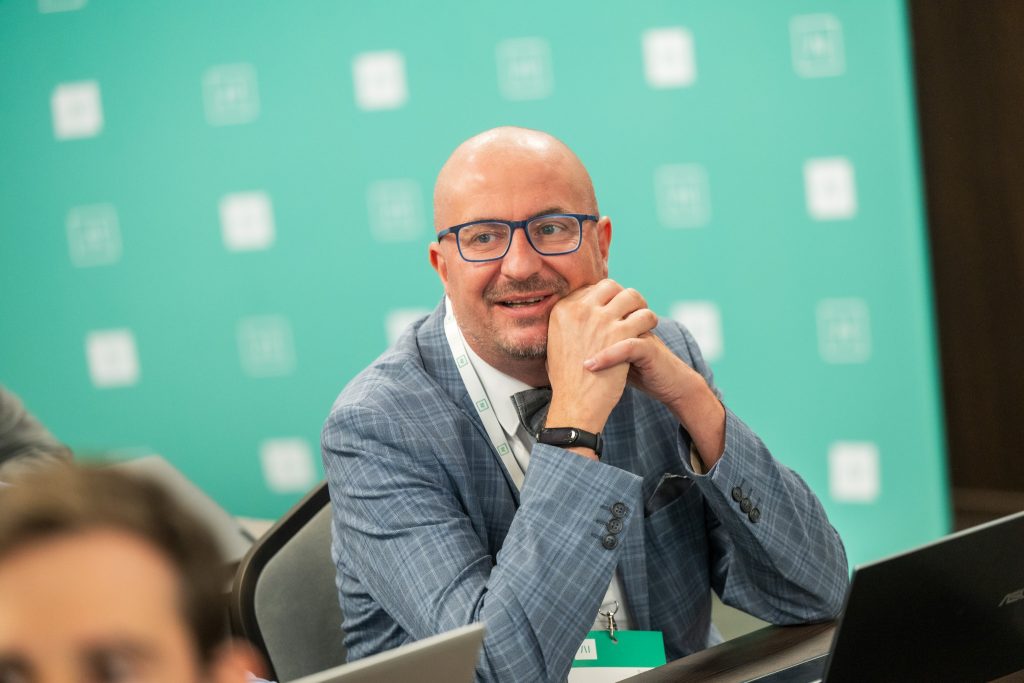
A bald man in a checked blue suit and glasses smiles while seated at a SustAInLivWork event. The green backdrop features the Centre’s branding, highlighting its focus on AI and sustainability.
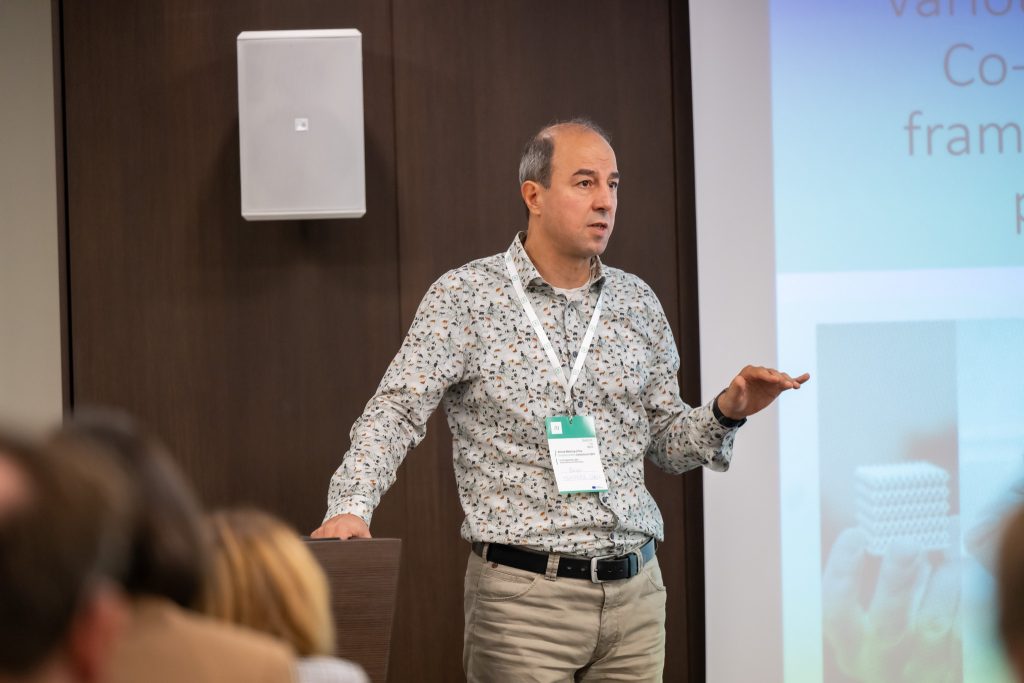
A man in a patterned shirt speaks at a podium during a SustAInLivWork presentation, gesturing toward a projected slide. The session focuses on AI-driven solutions for sustainable living and working.
Co-funded by the European Union logo
The project is co-funded under the European Union’s Horizon Europe programme under Grant Agreement No. 101059903 and under the European Union Funds’ Investments 2021–2027 (project No. 10-042-P-0001).